
Pulse and gating control
Supports command-driven or timing-driven control of the microwave path where the system needs to switch or shape energy.
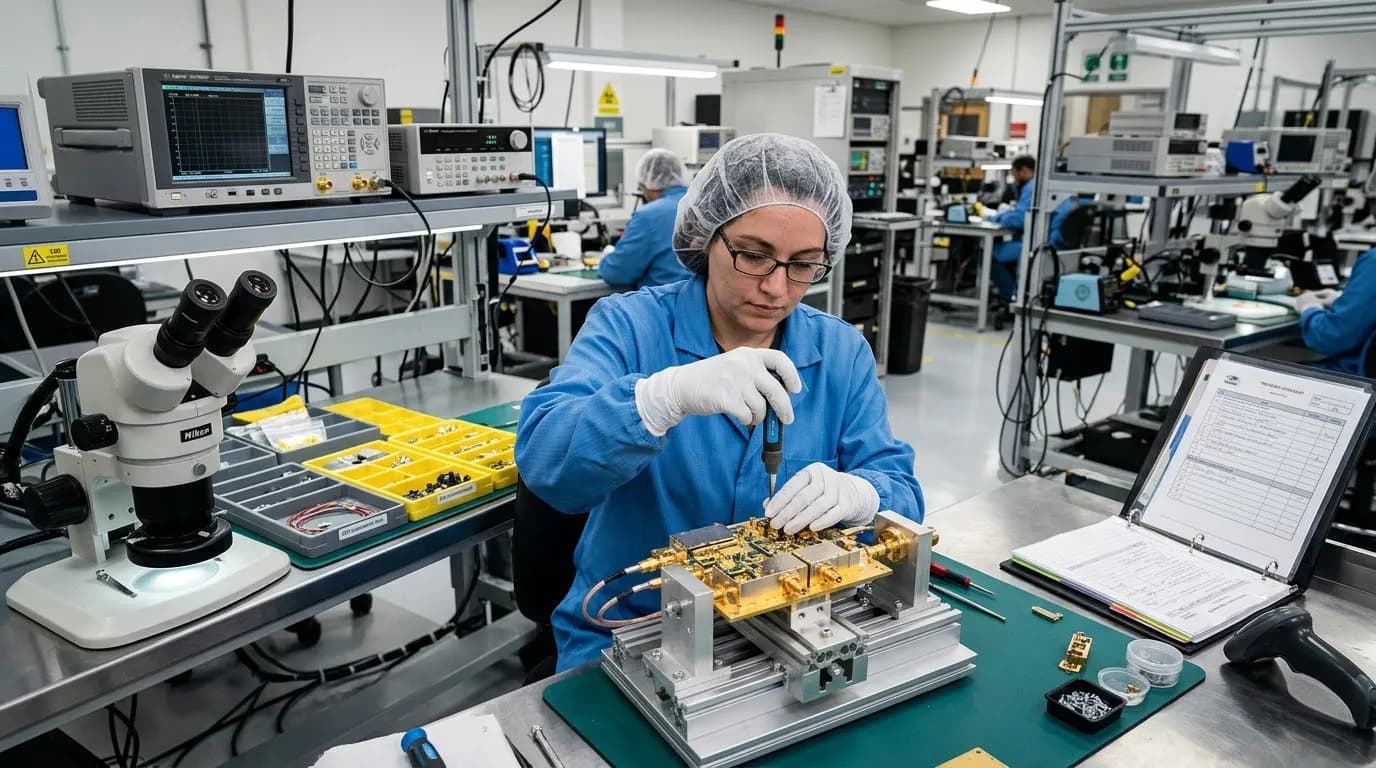
MICROWAVE MODULATORS
Microsource microwave modulators include broadband pulse-modulation and attenuation-control products used where the microwave path must respond to timing, gating, or controlled level changes.
Current interest includes resurrecting the broadband pulse modulator family used with Giga-tronics signal generators, along with continuously variable and digitally controlled step attenuators.
Product overview
Controls, gates, or shapes energy in a microwave path when the signal must respond to a timing plan, command input, or program-specific control scheme.
Usually inside a larger subsystem rather than as an isolated part, because the modulation behavior only makes sense relative to the source, translation, or control path around it.
Signal control
A modulator is only useful if it preserves the broader system intent, so the control method, RF interface, and packaging need to match the application rather than drive it.
Controlled signal shaping or gating inside a larger RF path
Integration with timing, control, or drive circuitry defined by the program
Compatibility with subsystem-level packaging and interface needs
A fit when the microwave chain needs more than passive transport
Specific modulation method and performance characteristics depend on the approved build and program requirements.
Capabilities
This category is positioned around application fit and system behavior, not a one-size-fits-all part number.
Supports command-driven or timing-driven control of the microwave path where the system needs to switch or shape energy.
Covers continuously variable and digitally controlled step attenuator use cases where controlled level management is the main requirement.
Can be aligned with the electrical and mechanical requirements of the broader subsystem.
Modulation needs vary widely, so the implementation should reflect the actual program requirement rather than a generic spec sheet.
If the modulation requirement is mission-critical, define the drive conditions, timing behavior, and RF environment early in the process.
Applications
Modulators are often selected for systems that need explicit control of the RF path inside a larger platform or test environment.
Fits broadband pulse-modulation accessory roles where the source output needs controlled pulsing or gating.
Supports system timing or control logic where the microwave path must be gated or shaped as part of an operating mode.
Useful when the platform needs controlled RF behavior that aligns with a wider operational sequence.
Can support bench or system testing where the path needs to be turned on, off, or shaped under control.
Frequently best when embedded into a broader assembly that includes sources, filters, and translation stages.
Representative evaluation points
Because microwave modulation needs vary widely by mission, the most useful consistency point is the evaluation table: what control behavior the system needs, where the RF path sits, and how that function is accepted.
| Parameter | Representative value |
|---|---|
| Control objective | |
| Typical role | Gating, shaping, or command-driven control of a microwave path |
| Most common context | Radar control, EW sequencing, or test-path control |
| What to define | |
| RF path | Where the controlled signal sits in the larger subsystem |
| Timing behavior | How quickly and predictably the path must respond to control |
| Interface method | Electrical or program-level control expected by the surrounding hardware |
| Program fit | |
| Verification | Acceptance should reflect both the RF behavior and the control behavior together |
Switching behavior, insertion loss, control timing, and spectral side effects should all be confirmed against the approved modulator implementation.
Hardware
Microwave modulators succeed or fail at the interface boundary. The RF path, control entry point, and package constraints should all be visible before the hardware is locked so the modulation function fits the larger subsystem cleanly.
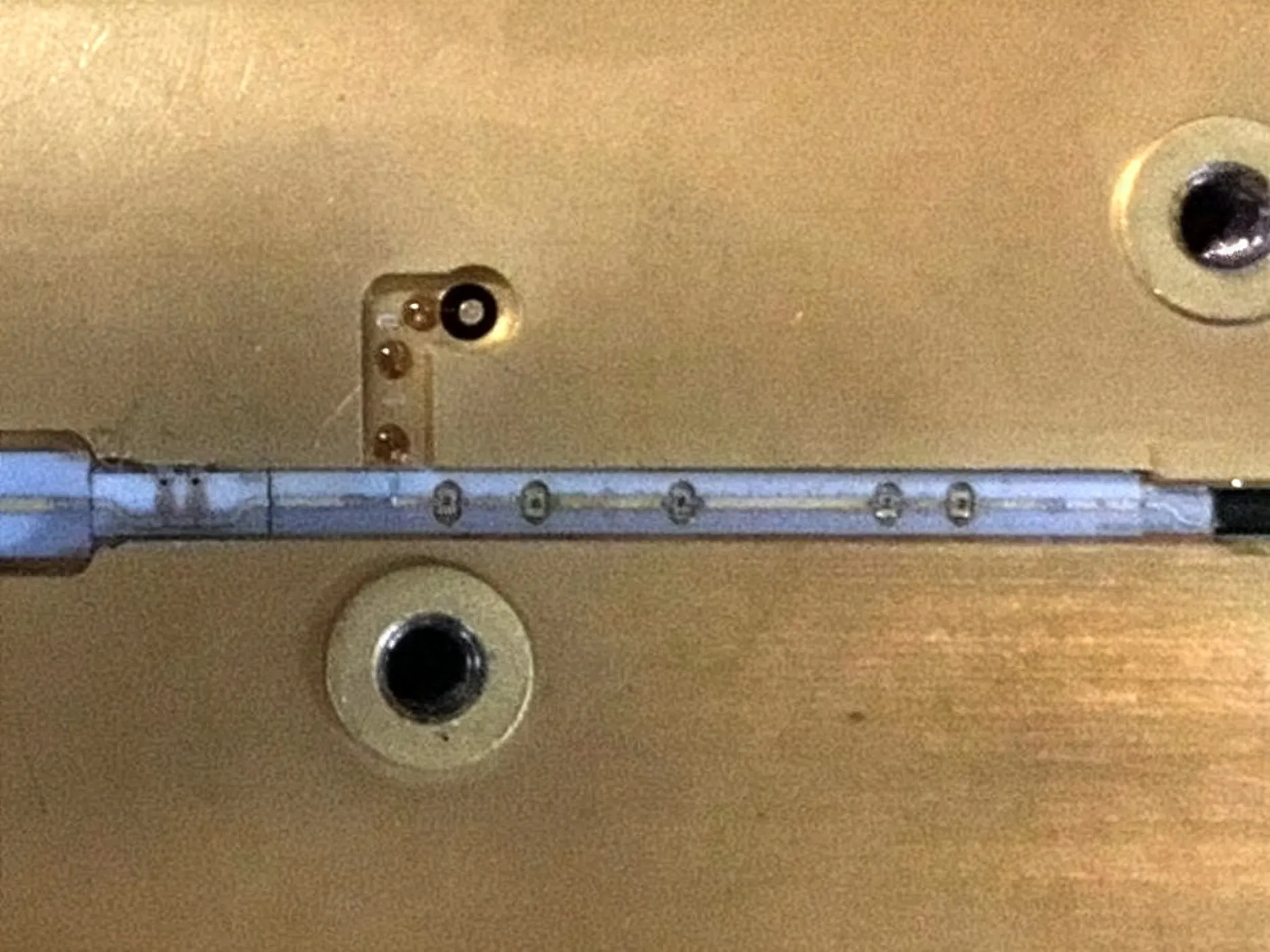
System integration
Microwave modulators are best understood as control-enabled RF stages inside a broader path. Their fit depends on how cleanly they connect source, logic, and downstream RF functions.
Representative modulation context
Packaging
The control interface, RF interface, and thermal/mechanical envelope should be defined together so the modulator fits the platform cleanly.
The more tightly coupled the control function is to the rest of the system, the more important early interface definition becomes.
Related solutions
Modulators usually sit inside a wider microwave chain that includes translation, filtering, and packaging decisions.
Microwave Frequency Synthesizers
Stable source hardware that can feed controlled microwave paths.
Linear Frequency Converters
Translation stages that often sit next to modulation and control functions.
Custom Integrated Microwave Assemblies
Custom packaged subsystems that combine modulation with the rest of the chain.
Next step
Share the control concept, RF path, and timing needs so Microsource can evaluate the right implementation approach.